
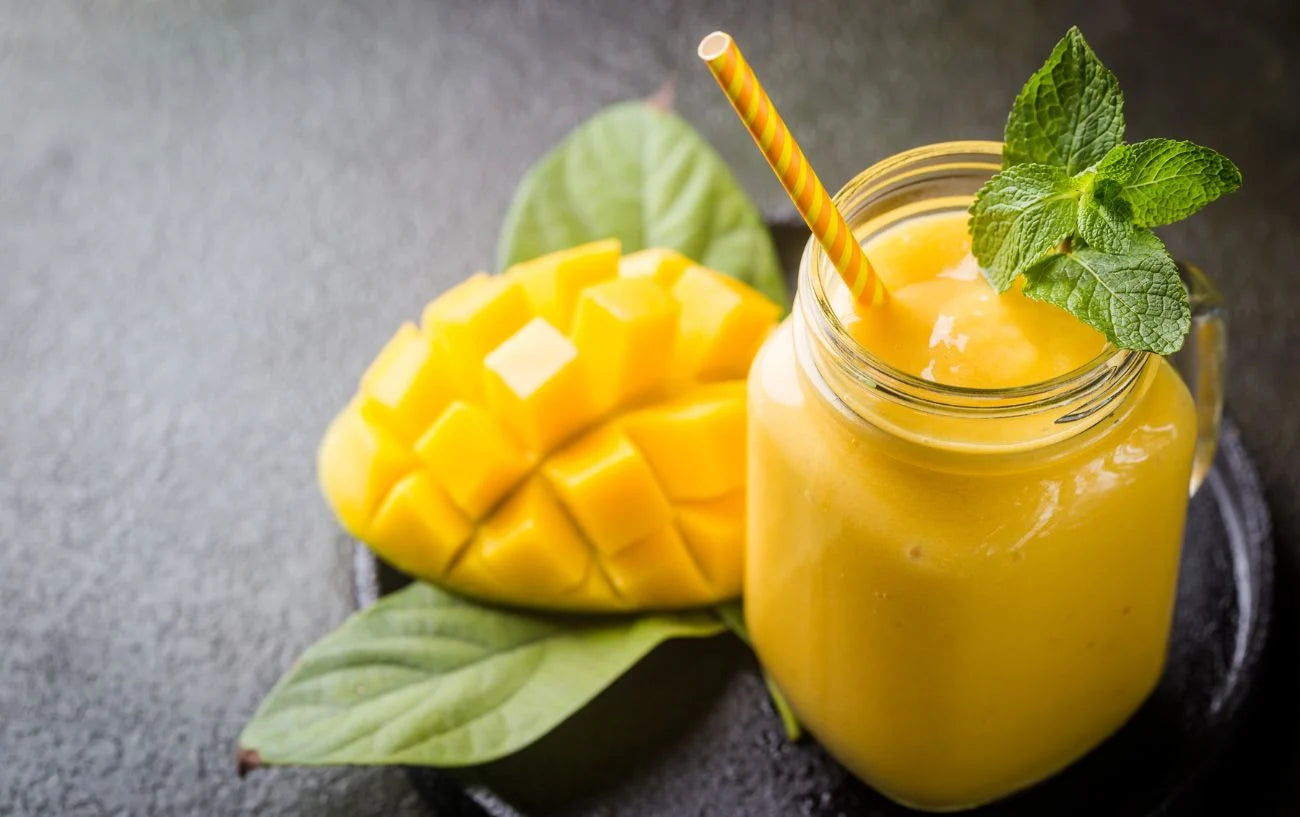
Smoothies often contain lots of fruit, which is a great source of quick-acting carbohydrates for exercise.
In most cases, you’ll want to wait at least an hour after having a pre-workout smoothie to go running so that you have ample time to digest the smoothie.
Running too soon after eating or drinking a smoothie can leave you feeling weighed down and contending with the liquid sloshing around your stomach the whole run.
Here’s a recipe for this one of our pre-workout smoothies for runners:
- 1½ cups (340ml) of unsweetened coconut water
- 1 large raw peeled beet or 10–15g of dried beet powder
- 2 fresh or 5 dried apricots, seedless and sulfate free
- 3/4 cup (250 grams) of fresh or frozen pineapple
- 1 banana
Blend all the ingredients in your blender. Add more coconut water or a splash of pineapple juice if it’s too thick.
Enjoy 1-2 hours before you go running.
This is a great pre-workout smoothie recipe because it contains the carbohydrates, electrolytes, nutrients, and fluids you need for running.
Beetroot is high in natural nitrates, which are compounds that contain nitrogen bonded to three oxygen atoms.
Natural nitrates get converted to nitric acid in the body by the beneficial bacteria in your gut. Nitric acid, in turn, acts as a vasodilator, increasing blood flow, reducing blood pressure, and improving exercise performance.
In order to give your body enough time for the nitrates in the beetroot to get broken down to nitric acid and for the nitric acid to dilate your blood vessels, you’ll want to drink the smoothie at least one hour before you run though 90 minutes is ideal.
Beets are also high in glucose, which is your body’s preferred carbohydrate source during exercise. About 10% of the gross weight of a raw beet is glucose, so if you have an 80g beet, you’ll get about 8 grams of glucose, along with 6 grams of other sugars.

Beets also contain iron, which is helpful for preventing iron-deficiency anemia.
Apricots are a great fruit for pre-workout smoothies because, unlike most fruits, which are relatively high in fructose and low in glucose, apricots have the opposite ratio.
The high glucose concentration provides a readily-available fuel source for your muscles without needing to undergo conversion prior to use.
Apricots also contain more than three times as much potassium as bananas. This electrolyte can help prevent muscle cramps during exercise and will aid in the absorption of fluids to prevent dehydration.
Bananas provide additional potassium, as well as magnesium and carbohydrates, for energy.
Pineapple contains an enzyme called bromelain, which can improve digestion and reduce inflammation, helping you feel more comfortable and energized on your run.
Finally, coconut water is a rich natural source of potassium, so it will help hydrate you before you run and may reduce the risk of muscle cramps.

Leave a comment
This site is protected by hCaptcha and the hCaptcha Privacy Policy and Terms of Service apply.